When decay, fracture, or wear disrupts a tooth's structure, a dental filling restores its shape, strength, and function with minimal intervention. Modern fillings let us preserve as much natural tooth as possible while sealing out bacteria and restoring chewing comfort.
Tooth decay remains one of the most common oral health concerns across all ages. Because fillings are a straightforward, time-tested response to cavities, clinicians place them routinely—yet each restoration is tailored to the patient’s needs, the tooth’s condition, and desired aesthetic outcome.
At Schneider Family & Cosmetic Dentistry, our focus is to pair conservative techniques with contemporary materials so restorations look natural and stand up to the demands of daily life. We emphasize careful diagnosis and preparation to extend the life of the treated tooth and the surrounding smile.
Attempts to repair teeth date back millennia, but materials and methods have come a long way. Early restorations were rudimentary and limited by the technology of their time. Over the centuries, clinicians experimented with metals, ceramics, and eventually synthetic resins to improve function and durability.
The 19th and 20th centuries ushered in durable metal alloys that improved longevity, while the last several decades have seen a shift toward tooth-colored options and adhesive techniques. These advances allow restorations that are both strong and subtle—meeting modern expectations for appearance as well as performance.
Our clinical approach balances durability, conservation, and aesthetics. We evaluate each restoration by how well it protects the remaining tooth, preserves occlusion (bite), and blends with adjacent teeth. When possible, we favor techniques that require less removal of healthy structure while providing a tight seal against future decay.
We also take patient preferences into account—some people prioritize an invisible match to their teeth, while others emphasize long-term wear resistance. By discussing the strengths and trade-offs of each option, we help patients make informed choices tailored to their mouths and lifestyles.

Not all fillings are created equal. Materials differ in strength, wear resistance, aesthetics, and how they bond to tooth structure. Selecting the right one depends on the size and location of the cavity, the patient’s bite forces, and cosmetic priorities.
Newer adhesive materials let us bond restorations directly to tooth enamel and dentin, reinforcing the remaining structure. In contrast, traditional materials rely more on mechanical retention. Understanding these differences helps predict how a filling will perform over time.
Below are commonly used restorative materials and what patients can expect from each. The list highlights practical advantages and limitations so you can better understand the trade-offs involved.
Composite fillings are made from a resin matrix blended with fine glass or ceramic particles. They are shaded to match the surrounding tooth and are widely used for visible areas because they blend seamlessly with enamel.
Because composites bond to the tooth, they often require less removal of healthy tissue. They offer good durability for many applications but can be more susceptible to surface wear and staining over long periods compared with certain ceramics.
Amalgam has a long clinical history because it’s strong, resilient, and well suited for posterior teeth that endure heavy chewing forces. It tends to be forgiving in challenging cavity shapes and remains serviceable for many years.
While not tooth-colored, amalgam remains a dependable option in select situations where durability and proven performance are the priority.
Glass ionomers chemically bond to tooth structure and release low levels of fluoride, which can be helpful in reducing the risk of recurrent decay near the margins. They are commonly used in pediatric dentistry and for small restorations near the gumline.
Though useful in specific scenarios, glass ionomers are generally less wear-resistant than composites and ceramics, so they’re chosen carefully based on the tooth’s role in function.
Ceramic restorations, often fabricated in a lab or milling unit, offer superior color stability and resistance to staining. Inlays and onlays are indirect restorations that conserve healthy tooth structure while providing robust, long-lasting repairs for larger defects.
Because they are crafted outside the mouth and then bonded in place, ceramics can offer an excellent blend of strength and aesthetics for teeth that need more than a direct filling but less than a crown.
Gold remains a high-performance restorative material with excellent longevity and biocompatibility. It resists wear well and is gentle on opposing teeth, making it a durable option for posterior restorations.
Gold is less commonly used today because of its appearance and cost, but it still represents a reliable solution where longevity is the primary goal.
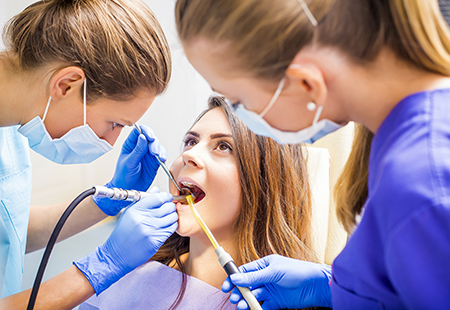
A typical filling appointment begins with a careful evaluation—visual exam, radiographs if needed, and a discussion of options. From there we plan a treatment that preserves healthy tooth tissue while removing decay and preparing the tooth to receive the chosen restoration.
Most restorations are placed under local anesthesia so that the procedure is comfortable. After decay is gently removed with rotary instruments, air abrasion, or laser technology when appropriate, the cavity is cleaned and conditioned for bonding or placement of the selected material.
Direct restorations like composites and glass ionomers are placed and sculpted in the same visit, then cured or set. Indirect options such as ceramic inlays require an impression or digital scan and a second appointment to cement the finished piece. If anxiety is a concern, we can discuss dental sedation options to enhance patient comfort.
Small to moderate cavities and minor fractures are often well managed with fillings. They are conservative, effective, and usually the best first-line treatment for isolated lesions that don’t compromise the tooth’s overall integrity.
When decay is extensive, or a tooth has had multiple prior restorations, an inlay, onlay, or crown may be a more predictable long-term solution. These restorations distribute chewing forces across a larger area and can better protect weakened teeth from future fracture.
Your clinician will assess remaining tooth structure, proximity to the nerve, and functional demands when recommending restorative pathways. The goal is always to choose the option that best preserves oral health while delivering a durable and comfortable outcome.

After placement, it’s normal to have temporary numbness from anesthesia—avoid chewing or touching the area until sensation returns. A newly restored tooth may feel slightly different at first; most patients adapt quickly once any initial adjustments are made.
Short-term sensitivity to temperature or pressure can occur and typically diminishes within days to weeks. If sensitivity increases or pain develops, contact the practice so the restoration and bite can be evaluated for fine-tuning.
Long-term success depends on good oral hygiene and routine dental checkups. With proper care, many modern restorations last for years; however, they can wear, chip, or develop marginal breakdown over time and may require repair or replacement in the future.
Dental fillings remain a cornerstone of restorative care—offering conservative repair, protection against further decay, and cosmetic options that blend with the natural tooth. Understanding material choices and what to expect during treatment helps patients make confident decisions about their care.
If you have questions about which filling material is best for your situation or want to discuss a specific tooth, the team at Schneider Family & Cosmetic Dentistry is available to review options and create a plan that fits your oral health goals.
For more information or to schedule an evaluation, please contact us to discuss your needs and explore the restorative solutions available.
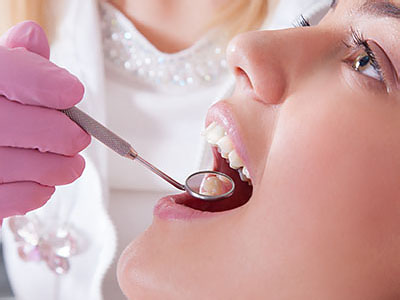

Dental fillings are restorations used to repair teeth damaged by decay, fracture, or wear. They restore the tooth's shape, strength, and function while sealing the area against bacteria. Modern techniques focus on preserving as much natural tooth structure as possible and restoring comfortable chewing.
Fillings can be placed as direct restorations in a single visit or as part of a larger restorative plan when more tooth structure is missing. The selected material affects durability, appearance and how the restoration bonds to the tooth. Your clinician will explain options and help you choose a solution that balances function and aesthetics.
Common filling materials include tooth-colored composite resins, amalgam (silver) restorations, glass ionomer cements, ceramic inlays and onlays, and gold alloys. Each material differs in strength, wear resistance, color stability and how it attaches to enamel and dentin. Some materials are placed directly in the mouth, while others are fabricated outside the mouth and bonded in place.
Adhesive materials such as composite and glass ionomer bond to tooth structure and can reinforce remaining tooth tissue, while traditional metals rely more on mechanical retention. Ceramics and gold offer excellent longevity and resistance to staining but are generally used when a more robust indirect restoration is needed. Understanding these differences helps set expectations for appearance, performance and long-term care.
The decision is based on several clinical factors, including the size and location of the cavity, the tooth's role in chewing, bite forces, and how visible the tooth is when you smile. Your overall oral health, existing restorations and any history of sensitivity or bruxism (tooth grinding) will also influence material selection. Patient priorities such as wanting an invisible match or preferring maximum wear resistance are part of the discussion.
During your evaluation the dentist will use visual examination and radiographs or digital scans to assess the defect and remaining tooth structure. They will explain the trade-offs of each option and recommend a material or restorative pathway that provides the best balance of strength, conservation and appearance for your situation. In some cases a simple filling is ideal, while larger defects may call for an inlay, onlay or crown.
A typical filling visit begins with a focused exam and, if needed, radiographs or a digital scan to identify the extent of decay. Local anesthesia is usually administered so the procedure is comfortable, then decay is gently removed and the cavity is prepared for the chosen material. Direct restorations like composites are placed, contoured and cured in the same visit, while indirect options such as ceramic inlays require a second appointment to cement the finished piece.
If anxiety is a concern, sedation options can be discussed to improve comfort during treatment. After the filling is placed the bite will be evaluated and adjusted as needed to ensure proper occlusion. If you have questions about scheduling or the specifics of the procedure, contact Schneider Family & Cosmetic Dentistry in Mooresville for a personalized consultation.
Following placement it is normal to have temporary numbness from local anesthesia, so avoid chewing or touching the treated area until sensation returns. A newly restored tooth may feel slightly different at first, and short-term sensitivity to temperature or pressure can occur; this typically subsides within days to weeks. If sensitivity worsens or persistent pain develops, have the restoration and bite evaluated promptly.
Long-term success depends on good oral hygiene, including regular brushing, flossing and routine dental checkups to monitor margins and adjacent teeth. Avoiding very hard or sticky foods can reduce the risk of premature wear or fracture, and wearing a nightguard can protect restorations for patients who grind their teeth. Regular professional cleanings and examinations help detect wear, small chips or marginal breakdown early, when repairs are simpler.
Many modern restorations last for years, but there is no fixed lifespan since longevity depends on material choice, the size of the restoration and functional demands placed on the tooth. Factors that influence durability include oral hygiene, diet, bruxism, bite alignment and how well the margins are sealed. Larger restorations and those in high-stress areas of the mouth tend to require replacement or repair sooner than small, well-sealed fillings.
Regular dental checkups allow your clinician to monitor restorations for wear, marginal leakage or recurrent decay and recommend conservative repairs when appropriate. Maintaining healthy gums and reducing habits that overload teeth will extend the useful life of fillings. If a restoration shows signs of breakdown, addressing it early helps preserve the underlying tooth and avoid more extensive treatment.
Fillings are ideal for small to moderate cavities and minor fractures, but when a tooth has extensive decay, large previous restorations or significant structural loss, an inlay, onlay or crown may be a more predictable long-term solution. These indirect restorations distribute chewing forces across a larger surface and better protect weakened teeth from future fracture. If the decay approaches the nerve or the tooth is extensively compromised, additional treatment such as root canal therapy plus a crown may be advised.
Your dentist will evaluate remaining tooth structure, occlusal forces and the expected functional demands when recommending the restorative pathway. The goal is always to preserve healthy tissue while restoring strength and function in a way that minimizes the need for future retreatment. When in doubt, choosing a more protective restoration can reduce the risk of repeated repairs.
Sensitivity following a filling is common and can result from nerve irritation caused by decay removal, the bonding process, or minor inflammation of the pulp. A change in bite height or a high contact can also create discomfort when chewing, and thermal sensitivity is typical in the first days to weeks after treatment. These symptoms usually lessen as the tooth heals and you adapt to the restoration.
Contact the office if sensitivity increases rather than decreases, if you experience sharp pain with biting, prolonged sensitivity to hot or cold beyond a few weeks, swelling, or any signs of infection. Prompt evaluation allows adjustments to the restoration or further treatment if needed to protect the tooth and relieve symptoms. Timely attention often prevents more extensive procedures later on.
Composite materials have advanced substantially and offer excellent strength and longevity for many applications, especially when bonded correctly to tooth structure. Composites also provide superior aesthetics because they can be shaded to match the surrounding enamel and require less removal of healthy tissue. In high-stress posterior situations amalgam or indirect restorations can still be advantageous due to their long clinical history and wear resistance.
The best choice depends on the tooth's location, cavity size and the patient's functional needs; many posterior cavities can be reliably restored with modern composites when placed with proper technique. Your dentist will recommend the material that best balances durability and appearance for your mouth, and may suggest an indirect onlay or crown when extra strength is needed. Good maintenance and regular monitoring help any restoration perform well over time.
If a filling cracks or becomes loose, save any pieces if possible and rinse your mouth gently to remove debris. Avoid chewing on the affected tooth and use soft foods to minimize further damage; an over-the-counter temporary dental material can protect the area briefly if you cannot reach the office immediately. Contact the dental office promptly to schedule an evaluation so the restoration can be repaired or replaced before additional decay or damage occurs.
During the appointment your dentist will assess the tooth and determine whether a repair, a new filling, or an indirect restoration such as an inlay, onlay or crown is the best option based on the remaining tooth structure. Timely treatment often allows for a conservative repair and helps preserve the tooth long term. To arrange care or discuss symptoms, call Schneider Family & Cosmetic Dentistry and request guidance from the treatment team.

Ready to schedule your next dental appointment or have questions about our services?
Contacting Schneider Family & Cosmetic Dentistry is easy! Our friendly staff is available to assist you with scheduling appointments, answering inquiries about treatment options, and addressing any concerns you may have. Whether you prefer to give us a call, send us an email, or fill out our convenient online contact form, we're here to help. Don't wait to take the first step towards achieving the smile of your dreams – reach out to us today and discover the difference personalized dental care can make.